Warzone streamers vs 50 Iridescents customs where the ranked ladder finally meets the creator class
Need articles like this for your video? They help promote it on YouTube and Google — order them in the Telegram bot @sat_sit_bot. The bot writes and publishes the articles itself (with your YouTube video embedded) on popular topical websites (no ads). Your first 50 articles are free.
· based on the channel Swagg
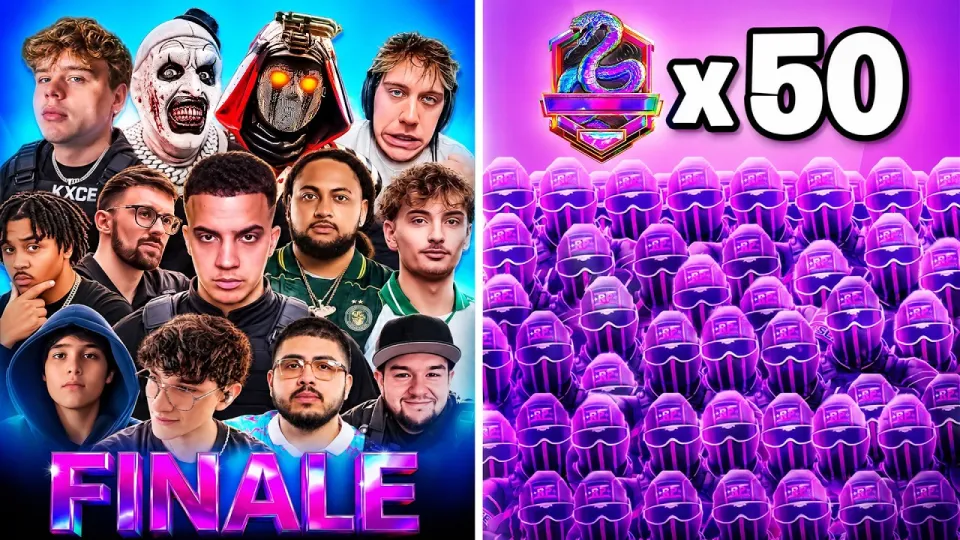
The answer is that the Iridescent pool does not simply roll over the streamers, and it does not get rolled either: in Swagg's Iri Invitational finale, roughly 50 Iridescent-ranked players and a lobby of full-time Warzone creators trade wins across six Rebirth Island ranked solo customs for a $2,000 prize pool, with the ranked ladder winning more individual fights than the star-power gap suggests. The whole point of the format is that ranked rating and creator reputation are two different currencies, and six games is enough to show which one pays out under pressure. You can watch the host's live channel and follow the next edition through Swagg's Twitch stream.
What the Iri Invitational actually is and how the Warzone customs were built
The Iri Invitational is a community tournament concept where the best-ranked Warzone players are invited to prove their rating against recognizable streamers in custom lobbies. The finale is built as six back-to-back ranked solo customs on Rebirth Island, broadcast with all player POVs so viewers can follow individual fights rather than a single observer camera. The invited list mixes creator-side names like Shifty, Hisoka, JoeWo, Metaphor, Kxce, Diablo, Dongy, Kenner, Ketchup, Repullze, Saxzu and Lucky Chamu with a wider pool of Iridescent-ranked competitors, and the whole thing is played for $2,000. Nothing about the setup is casual: ranked solo customs on Rebirth mean third-party pressure, respawn economy and a shrinking circle that punishes anyone who plays for content instead of placement.
Why ranked rating and streamer reputation are not the same skill
Ranked rating measures consistency across hundreds of matches, while a creator lobby measures adaptation inside a single six-game block. An Iridescent player earns that badge by winning gunfights and rotations against unknown opponents on their own schedule; a streamer earns attention by making high-variance plays that look great on camera. Put both in the same custom and the ranked specialist usually has the cleaner fundamentals, while the creator has more reps against elite opposition and better instincts for reading a lobby full of names they recognize. That is why the series is interesting: it isolates which half of the equation matters more when the lobby is stacked and everyone knows everyone.
The moments the community keeps replaying
Three things dominate discussion of the finale. First, the Kenner question: the broadcast carves out a segment asking whether Kenner is cheating, and the chat and comment sections split hard between people calling it obvious and people calling it a compliment to his level. Second, the Ketchup clutch late in the set, which became the clip of the event. Third, the Metaphor show: viewers repeatedly flag his shot as crisp and his smoke usage with mouse and keyboard as a smart, deliberate advantage rather than a gimmick. The other recurring thread is attrition, with JoeWo and Saxzu criticized for stepping out after taking a heavy loss, and Biffle's absence noted as the biggest hole in the roster.
How to read a six-game custom set like a coach
Six games is a small sample, so treat the results as a trend line rather than a verdict. Use this order when you review a set:
- Count placement points first, because a single early death in ranked solo customs costs more than a mediocre gunfight.
- Separate kills earned off rotations from kills earned off third parties, since the second type inflates stats without proving control.
- Track who adapts after game three, when the lobby has learned each other's landing spots and loadout habits.
- Ignore one-off highlight reels and look at repeatable decisions: smoke timing, zone holds, and whether a player re-challenges the same angle twice.
- Weigh the POVs, not the observer feed, because the broadcast camera hides the information a player actually had.
The typical doubts around Warzone streamer vs ranked matchups
Most skepticism about events like this falls into three buckets. The first is legitimacy: whenever an unknown or fast-rising player dominates a lobby of established names, accusations follow, and the honest answer is that a broadcast cannot settle it, only a LAN or a verified setup can. The second is roster credibility, since a streamer invitational without Biffle or Booya leaves the strongest possible field unproven. The third is format fairness, because solo customs on Rebirth Island reward zone luck more than a structured kill-race would, and a six-game set can be decided by two bad drops. None of these objections kill the concept; they are the reasons a second and third edition would be worth watching.
What the finale suggests about Warzone's competitive middle ground
Warzone has long had two ecosystems that barely touch: ranked grinding and creator content. The Iri Invitational works because it forces contact between them without pretending either side is the official competitive standard. The ranked pool gets a stage and a payday, the creators get opponents who punish sloppy habits, and viewers get a lobby where the outcome is genuinely uncertain. The audience response points the same direction, with calls for the series to return every year, for a LAN appearance from the standout names, and for the roster to expand rather than shrink. That is a healthier sign for the game than another highlight compilation, because it builds an event with stakes instead of a personality showcase.
Useful links
- Swagg on Twitch — live Warzone and the next customs night
- FaZe Clan Nuke Squad merch — apparel from the host's team
- Swagg's Discord — community, lobbies and event announcements
- Swagg on Twitter — schedules and results
- Swagg on Instagram — clips and behind-the-scenes
The takeaway from the Iri Invitational finale
The Iri Invitational finale makes a simple case: Warzone's ranked ladder is deep enough to produce players who can hang with full-time creators, and the creator class is experienced enough that no Iridescent stack walks through a lobby of them. Six games on Rebirth Island produced a split verdict, a genuine cheating debate around Kenner, a signature Ketchup moment and a Metaphor performance that reframed how viewers rate his ceiling. The format's real achievement is structural, turning a one-off custom night into something the community wants annually. This breakdown comes from the channel Swagg, which hosted the event and published the full all-POV finale; follow the live channel to catch the next one.
Key takeaways
- Format: 6 games of Warzone ranked solo customs on Rebirth Island, streamers against a pool of roughly 50 Iridescent-ranked players.
- Prize pool: $2,000 in the first Iri Invitational, organized and hosted by Swagg.
- Talent list includes Shifty, Hisoka, JoeWo, Metaphor, Kxce, Diablo, Dongy, Kenner, Ketchup, Repullze, Saxzu and Lucky Chamu.
- The finale runs six full games with all POVs, and a dedicated segment questions whether Kenner is cheating.
- Community reaction pushes for the series to become annual and for a LAN or Biffle vs Kenner follow-up.
Questions & answers
Did the Iridescent players actually beat the Warzone streamers?
Across six games the result was not a clean sweep in either direction, which is the honest answer for a small sample. Ranked specialists won plenty of individual fights and at least some games, while the creators' experience in stacked lobbies kept the set close. A six-game solo custom on Rebirth Island is decided as much by drop luck and zone pulls as by raw skill.
Is Kenner cheating, or is it just a skill gap?
The finale includes a segment that explicitly raises the question, and the community is split. A broadcast cannot prove or disprove anything, because only a LAN setting or a verified setup with full input and screen coverage settles accusations. Until then, treat it as an unresolved talking point rather than a finding.
Why were Biffle and Booya missing from the lineup?
The invited roster for this edition did not include them, and viewers flagged it as the biggest gap in the field. Their absence means the event cannot claim to have gathered the strongest possible pool of creator talent. The natural fix is a wider invite list or a dedicated head-to-head match in a future edition.
Why did some players leave early after a rough game?
Departing after a heavy loss drew criticism because it undercuts the all-POV premise of the broadcast. The format depends on players staying in for the full six games so viewers can follow momentum shifts. A clearer commitment rule would protect the product in future editions.
Source: Can 50 Iridescents Defeat STREAMERS? (FINALE) · Markdown version